Why Your Next Car Might Power Your House: A Simple Guide to Vehicle-to-Home (V2H)
Some electric cars can run your home during outages or high-price hours. Here’s how V2H works, what you need, and who it’s for.
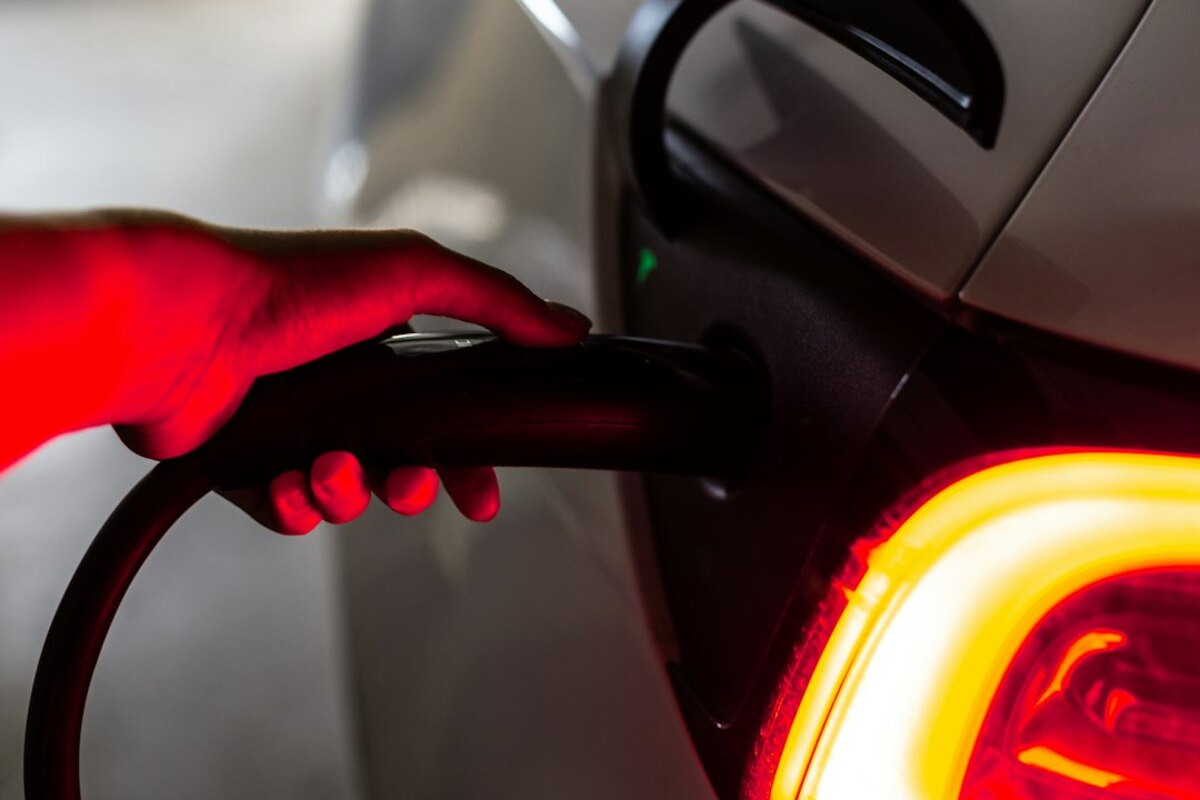
- Vehicle-to-Home (V2H) lets an EV battery send electricity back to your house, not just take power from it.
- You’ll typically need a compatible car, a bidirectional charger, and the right electrical setup—cost and availability vary.
- V2H can help during outages and may cut bills by shifting energy use, but it’s not “plug-and-play” for most homes yet.
Picture this: a blackout… and your living room stays on
It’s 8:30 p.m. The lights flicker, then the neighborhood goes dark. Your phone shows a utility alert: “Estimated restoration: 10–12 hours.” You make a quick mental list—fridge, Wi‑Fi, a couple lamps, maybe the microwave. If you own a gas generator, you’re thinking about fuel and noise. If you don’t, you’re thinking about candles.
Now imagine another option: your electric car in the driveway quietly keeps key circuits running. No extension cords snaking under the garage door. No rattling engine outside your window. Just stored energy you already paid for—available on demand.
That’s the basic idea behind Vehicle-to-Home, often shortened to V2H. It’s a feature (available on certain EVs and home setups) that allows your car’s battery to send power back into your home. And even if you don’t own an EV yet, V2H is worth understanding because it’s shaping how people think about backup power, home energy bills, and the future of “smart” homes.

What V2H actually is (and what it isn’t)
Most people are used to one-way charging: electricity flows from the grid to your home, then from your home to your car. With V2H, the flow can reverse: the car can supply electricity to the home when needed.
Here’s a simple analogy: think of your EV battery as a big water tank. Normally you fill the tank (charging). V2H adds a valve and plumbing so you can also use that stored water to supply the house when the city water is off—or when you’d rather use your own stored water because it’s cheaper at that moment.
It helps to separate a few terms that are often mixed together:
- V2H (Vehicle-to-Home): Your car powers your home (or part of it).
- V2L (Vehicle-to-Load): Your car powers devices directly—like plugging a coffee maker or power tools into an outlet on the vehicle or an adapter. This is often simpler and more common.
- V2G (Vehicle-to-Grid): Your car sends power back to the utility grid (more complex, more rules).
V2H sits in the middle. It’s more powerful and integrated than running a few gadgets off the car (V2L), but usually less paperwork-heavy than feeding electricity back to the grid (V2G).
What V2H is not: it’s not just “any EV can do this with a special cable.” In many cases, the car must support bidirectional power, and your home must have equipment that can safely isolate from the grid during an outage (so you don’t accidentally send power into downed power lines).
To make the moving parts less mysterious, here’s a plain-language look at the usual ingredients:
| Piece | What it does | Why it matters |
|---|---|---|
| Compatible EV | Has hardware/software that can discharge power in a controlled way | Without this, power can’t flow safely from car to home |
| Bidirectional charger (or power system) | Converts electricity between the car and the home and manages flow | This is the “valve and pump” that makes V2H practical |
| Transfer switch / home integration equipment | Disconnects your house from the grid during backup operation | Prevents dangerous backfeed and protects utility workers/equipment |
| Critical loads panel (sometimes) | Powers only selected circuits like fridge, lights, Wi‑Fi | Stretches battery life and simplifies installation |
In day-to-day life, V2H typically shows up in two practical modes:
- Backup mode: When the grid is down, your car keeps your essentials running.
- Bill-saving mode: When electricity is expensive at certain times, you run the home from the car for a while and charge later when rates are cheaper (availability depends on local pricing and equipment).
The “aha” moment for many people is realizing how much energy is sitting in a car battery. A typical EV battery can be tens of kilowatt-hours (kWh). Your home might use roughly that much in a day (very roughly—homes vary a lot). That means, in the right setup, your car can act like a large, temporary home battery.
How it feels in real life: small scenarios that make it click
V2H can sound like a futuristic feature until you picture the situations where it matters. Here are a few everyday scenarios where people get curious about it—plus what actually happens.
1) The “keep the fridge alive” outage
A short outage isn’t just inconvenient—it can waste food, disrupt work calls, and knock out internet access. In a V2H setup, you don’t try to power everything. Instead, you pick the circuits that matter: refrigerator, a few outlets, some lights, maybe the furnace fan (depending on your system).
That’s where a critical loads approach comes in. Rather than powering the whole house like nothing happened, you run a “survival set” of electricity. This makes the battery last much longer and reduces installation complexity.
2) The “quiet workday” backup
If you work from home, a long outage isn’t just about comfort—it can cost money. A car-based backup can be quiet enough that you can take calls without shouting over an engine. It also avoids storing gasoline. For many households, the ability to keep Wi‑Fi and a laptop running is the difference between “annoying” and “disaster.”
3) The “expensive hours” problem
In some places, electricity rates change by time of day. The price can spike in the evening when lots of people are cooking, washing, charging, and running AC. If your setup supports it, you could charge the car when rates are lower and use some of that energy during peak prices. The idea is similar to doing laundry at night to save money—just automated and bigger.
Whether this works well depends on your local utility plan, how much you drive, and how automated your equipment is. It’s not a universal savings button—but it can be meaningful in the right situation.
4) The “I already have solar” combo
If you have solar panels, you may already be thinking about energy independence. A common frustration is that solar production peaks midday, while many homes use more power in the evening. Home batteries can shift that energy; an EV with V2H can sometimes play a similar role, especially if the car is home during the day.
But there’s a catch: depending on your solar setup and local rules, solar may shut off during a grid outage unless you have special equipment. V2H can help, but the exact behavior depends on how the system is designed.
In all these cases, V2H is less about showing off cool tech and more about making energy feel a bit more “in your control.”
What to look for if you’re considering V2H (without getting lost in jargon)
If you’re intrigued, the next step is knowing what questions to ask—because V2H isn’t a single checkbox. It’s a combination of car capability, home equipment, and local electrical code realities.
Start with these practical questions:
- Is my EV (or future EV) capable of powering a home? Not all EVs support bidirectional power for home use. Some support “power outlets” (V2L) but not full home integration.
- Do I want whole-home backup or just essentials? Whole-home backup is more expensive and may require more robust hardware. Essentials-only can cover the most important needs for less cost.
- How often do outages happen here? If outages are rare and short, you may prefer a simpler solution (like V2L for a few devices). If outages are frequent, V2H can feel more worth it.
- How much do I drive? If you commute long distances daily, you may be less willing to “spend” battery powering the home—especially before a morning drive.
- What’s my local electricity pricing? If rates are flat all day, bill savings may be limited. If there are high peaks, shifting energy use can be more appealing.
Then think about the home side:
V2H isn’t just a fancy charger. It usually requires electrical work similar in spirit to adding a generator transfer switch or a home battery system.
- Installation and permitting: A licensed electrician will typically be involved. Local permits and inspections are common because this equipment interfaces with your home’s main electrical panel.
- Safety (islanding): During an outage, the system must isolate your home from the grid. This is non-negotiable safety engineering, not a “nice-to-have.”
- Where the power goes: Many people are surprised to learn that “powering your home” often means “powering selected circuits.” That’s usually the sensible design.
What about battery wear?
A normal worry is: “If I use my car like a home battery, will I wear out the EV battery faster?” The honest answer is that using any battery more will contribute to wear over time, but how much depends on how deeply you discharge it, how often, and how the system manages temperature and charging behavior.
In real life, many people would use V2H occasionally—mainly for outages—rather than cycling the battery every day. Occasional backup use is very different from daily peak-shaving. If daily cycling is your plan, it’s worth reading your vehicle warranty terms and asking installers/manufacturers how their system manages battery health.
A simple way to estimate “how long could it run?”
You don’t need to be an engineer to sanity-check expectations. You can think in two numbers:
- Battery capacity (kWh): how much energy is stored.
- Your backup load (kW): how fast you’re using energy at any moment.
If your essential circuits average 1 kW and you have 60 kWh available, that suggests roughly 60 hours in a perfect world. Real systems have losses, and you may not want to drain the battery to 0%. But it’s a helpful mental model.
For full-home V2H, you typically need dedicated equipment (often a bidirectional charger/system) plus a safe way to isolate your home from the grid during backup. Plugging into a regular outlet is more like V2L (powering a few devices) and won’t usually integrate with your home’s circuits.
For full-home V2H, you typically need dedicated equipment (often a bidirectional charger/system) plus a safe way to isolate your home from the grid during backup. Plugging into a regular outlet is more like V2L (powering a few devices) and won’t usually integrate with your home’s circuits.
Sometimes, but many installations focus on “critical loads” instead—fridge, lights, outlets for charging, internet, and a few rooms. Whole-home backup is possible in some setups, but it can be more expensive and may drain the battery faster than you expect.
Sometimes, but many installations focus on “critical loads” instead—fridge, lights, outlets for charging, internet, and a few rooms. Whole-home backup is possible in some setups, but it can be more expensive and may drain the battery faster than you expect.
No. V2H is about using your car’s stored energy in your home. Selling power back to the grid is usually called V2G and tends to involve more utility coordination, rules, and specialized programs.
No. V2H is about using your car’s stored energy in your home. Selling power back to the grid is usually called V2G and tends to involve more utility coordination, rules, and specialized programs.
The “should I wait?” question
V2H is gaining attention because more EVs and charger manufacturers are moving in this direction, and people are paying closer attention to outages and energy costs. But it’s also fair to say that the experience is not yet as standardized as, say, buying a basic Level 2 home charger.
If you love being an early adopter and you have a clear use case (frequent outages, strong need for quiet backup power, or high time-based rates), V2H can be an exciting upgrade. If you mostly want peace of mind and simplicity, you might compare it with other options—like a small portable battery for electronics, a home battery, or a generator—based on your budget and tolerance for installation complexity.
A helpful mindset: treat V2H like a home energy project, not just a car accessory. When it’s designed well, it can make your EV feel like part of your home’s infrastructure—more like an appliance you rely on than a gadget you occasionally charge.